
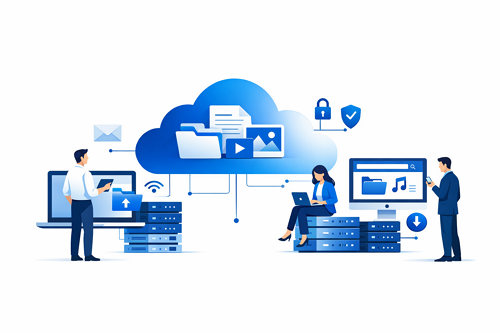
Cloud file hosting has become a core tool for modern businesses managing large volumes of digital content. Platforms like DDownload allow companies to store, manage, and distribute files globally without investing in expensive physical infrastructure.
Businesses today rely on fast, secure, and scalable systems to keep operations running smoothly. Traditional storage methods often struggle to keep up with growing data demands and remote work environments.
Key Benefits of Cloud File Hosting
Cloud-based file hosting offers several advantages that directly impact productivity:
- 📁 Centralized file management across teams
- 🌍 Anywhere access for remote and global workforces
- 🔒 Enhanced data security with encrypted storage
- ⚡ Faster file delivery using optimized networks
- 💰 Cost savings by eliminating hardware investments
Why Businesses Are Switching
Many organizations adopt file hosting to improve efficiency:
- Instant file sharing speeds up workflows
- Teams collaborate more effectively
- Updates and revisions are easier to manage
- IT maintenance costs are reduced
Traditional Storage vs Cloud File Hosting
| Factor | Traditional Storage | Cloud File Hosting |
|---|---|---|
| Accessibility | On-site only | Global access |
| Scalability | Limited | Highly scalable |
| Maintenance | In-house | Provider-managed |
| Collaboration | Basic | Advanced |
Companies aiming for growth need flexible tools. Cloud file hosting adapts to increasing storage needs while supporting faster and more reliable file distribution.
Understanding the differences between storage solutions helps businesses make smarter decisions. Learn more in our guide on cloud storage vs file hosting differences, which breaks down how each system works in real-world use.


