
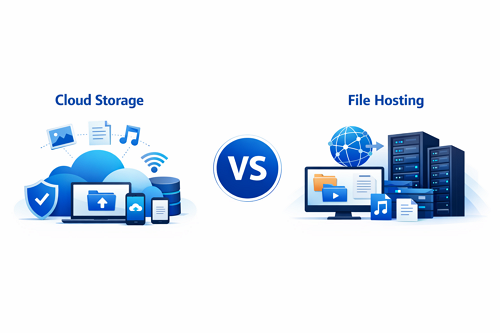
Cloud storage and file hosting are often confused, but they serve different purposes. Platforms like DDownload focus on sharing files through direct download links, while cloud storage services are designed for syncing and backing up personal data across devices.
Both solutions store files online, yet their core functionality differs in how users access and manage those files. Understanding this difference helps you choose the right tool for your needs.
Key Differences at a Glance
- 📁 File hosting is built for distributing files
- ☁️ Cloud storage focuses on backup and synchronization
- 🔗 File hosting uses shareable download links
- 🔄 Cloud storage syncs files across multiple devices
When to Use Each Option
File hosting works best for:
- Sharing large files publicly or privately
- Delivering downloadable content
- Generating income from downloads
Cloud storage is ideal for:
- Personal backups and file organization
- Accessing files across devices
- Collaborating with teams
Quick Comparison Table
| Feature | File Hosting | Cloud Storage |
|---|---|---|
| Primary purpose | File distribution | Backup & sync |
| Access method | Download links | Account-based |
| Collaboration | Limited | Advanced |
| Monetization | Available | Rare |
Many users combine both solutions for flexibility. File hosting handles distribution, while cloud storage keeps files safe and accessible.
To better understand how these systems operate, explore our guide on file hosting systems and backend processes, which explains the infrastructure powering modern file hosting platforms.


